The Core Differences Between Modern Stamp Formats
Choosing the right impression tool comes down to how frequently you plan to use it, the level of graphic detail required, and whether portability matters. Traditional handle-mounted rubber stamps, self-inking mechanical units, and pre-inked flash stamps each serve different workflows. Understanding how each style transfers ink to paper ensures you do not waste time or money on a model that jams during bulk mailings or smears on glossy surfaces.
Traditional rubber models consist of a vulcanized or laser-engraved rubber die bonded to an acrylic or wooden mount with an external handle. They rely entirely on a separate ink pad, making them exceptionally durable and easy to switch between varied colors. However, they require two physical motions for every mark you make: dabbing the die into the ink reservoir and pressing firmly onto your target surface.
Mechanical self-inking units streamline this process into one motion. Inside the plastic or metal housing, an internal ink pad rests against the die plate until you press down. The internal mechanism rotates the die downward against the paper, stamping the image and instantly returning against the pad when released. This mechanical convenience makes them the standard choice for rapid administrative paperwork.
Traditional Wood-Handle Rubber Stamps and When to Choose Them
The classic wood-mounted rubber stamp remains a favorite among crafters, packaging designers, and small business owners who value flexibility over sheer speed. Because the rubber die is exposed, you can wash it with mild soapy water between uses and switch from charcoal black ink to metallic gold or vibrant pigments in seconds using separate external pads.
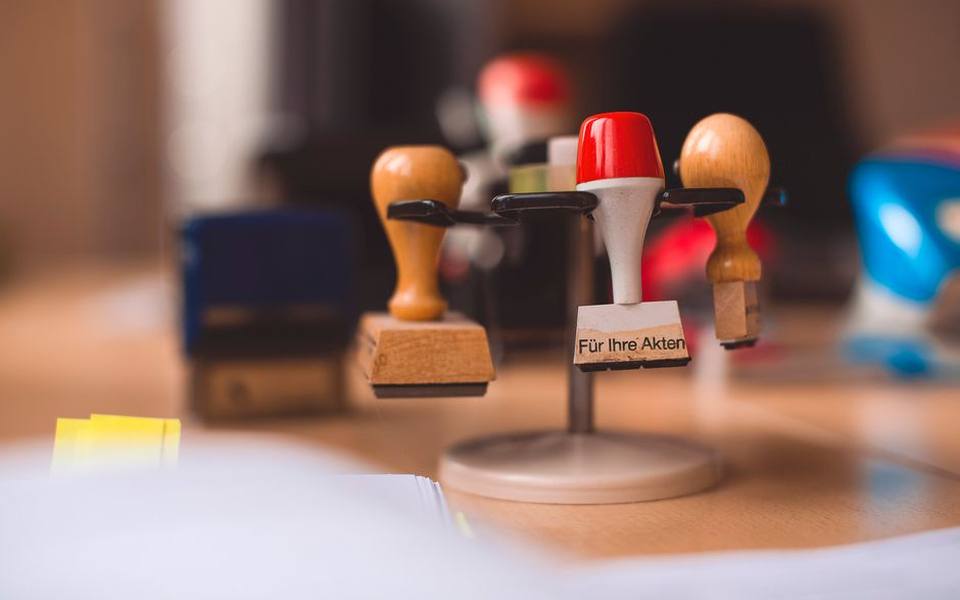
Wood stamps also accommodate larger dimensions than most mechanical bodies can handle. If you need a four-inch by six-inch logo stamp for unboxing cartons, retail paper bags, or rustic bakery boxes, an oversized wooden rocker mount distributes downward hand pressure evenly across broad surface areas. Mechanical self-inking units rarely exist in these larger formats due to spring tension limitations.
Durability is another distinct advantage of classic wooden construction. With no internal hinges, swivel pins, or plastic tracks to break under stress, a properly manufactured rubber die mounted on solid hardwood can last for decades. When you stop by local shops for self-service printing or routine office supplies, pairing a sturdy wood stamp with archival ink gives you an endlessly reliable branding tool.
Self-Inking Mechanical Stamps for High-Volume Repetition
When your daily routine involves endorsing hundreds of incoming checks, signing off on shipping manifests, or marking invoices as received, manual pad-dabbing quickly leads to wrist fatigue. Self-inking stamps incorporate an integrated pad directly above the die face. Every downward press activates a spring-loaded pivot that turns the rubber die one hundred and eighty degrees to strike the page.
These mechanical housings typically yield thousands of impressions before the internal pad begins to fade. The built-in guide window on the housing allows for precise alignment, helping you stamp inside compact form boxes or along signature lines without crooked results. They are particularly popular for return address markings, date tracking, and internal routing tags where speed and consistent placement are essential.
While highly efficient for standard copy paper, self-inking stamps have slight physical limitations. The rotating action requires relatively fluid water-based inks that dry through absorption into paper fibers. Attempting to use fast-drying industrial solvent inks inside these units can melt internal plastic components or dry out the exposed pad prematurely, so matching the unit to your intended paper stock is critical.
Pre-Inked Stamps for Crisp Graphic Detail and Sharp Lines
Pre-inked stamps operate on a fundamentally different principle than both wood mounts and rotating mechanical units. Instead of relying on a separate pad or an internal flipping mechanism, the stamp die itself is formed from micro-porous gel or light-sensitive synthetic resin saturated with liquid ink. When you apply light, downward pressure, ink oozes directly through microscopic pores in the raised letters onto the paper.
This manufacturing method allows pre-inked designs to reproduce remarkably fine lines, small typographical point sizes, and intricate corporate insignia that would fill in or blur on standard molded rubber. Because there are no moving parts turning upside down, the footprint of the tool is compact and silent during operation, making it ideal for quiet professional environments like legal offices and clinics.
Pre-inked models typically offer the highest impression count per refill cycle, often yielding several thousand sharp impressions before needing additional liquid. While they represent a slightly higher initial investment than traditional wooden dies, their clean operation and photographic clarity make them the gold standard for official notary insignias, bank teller stamps, and detailed business emblems.
Selecting the Right Inks and Managing Refills
Choosing ink is just as important as choosing the physical stamp body, as incompatible chemicals can quickly ruin your stamp pads or damage the rubber die. Standard office ink for self-inking units uses a water-based dye formula designed to soak cleanly into porous paper without bleeding through standard bond sheets. Using this ink on glossy coated cards or shrink-wrapped plastic, however, results in permanent smudging.
When stamping on non-porous materials such as poly mailers, cellophane, glassine, or vinyl tags, specialized solvent-based or quick-dry alcohol inks are necessary. These formulations evaporate rapidly in open air, creating a permanent bond on smooth surfaces. Because they dry so quickly, they must be used with traditional wooden stamps and airtight felt pads rather than open mechanical self-inking housings.
Refilling self-inking pads requires restraint and patience. Adding too many drops of fluid at once causes ink to pool around the text plate, leading to blotchy letters and smeared margins on your first few dozen impressions. Applying a few measured drops evenly across the felt surface and allowing several minutes for absorption ensures even distribution throughout the pad matrix without messy overflow.
Distinctive Finishes with Engraved Wax Seal Stamps
Wax seals have moved far beyond historical correspondence, finding a steady place in luxury wedding stationery, artisanal product packaging, and bespoke brand presentation. Unlike inked tools, a wax seal stamp uses a solid brass, copper, or steel die head with deep mechanical engraving. Pressed into molten sealing wax, it forms a tactile, three-dimensional impression that hardens into a rigid, protective medallion.
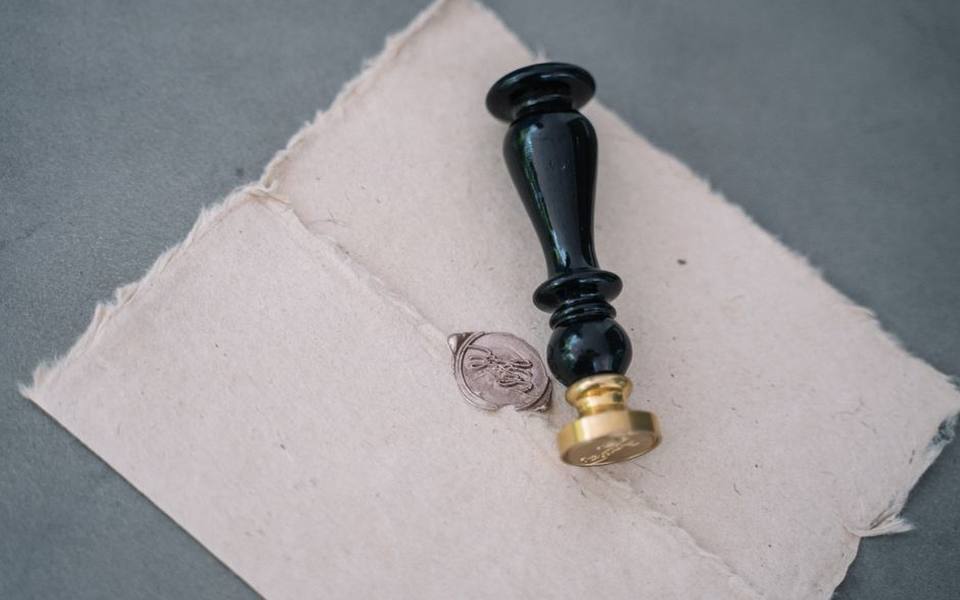
Creating a crisp wax impression depends heavily on temperature control and die temperature. A heavy metal die naturally draws heat out of the molten pool, helping the wax set quickly around the carved design. When producing large batches of sealed invitations, keeping the metal seal head resting on an ice pack between presses prevents the metal from overheating and sticking to subsequent wax drops.
Modern sealing waxes incorporate flexible synthetic polymers rather than brittle natural shellac and pine rosin. This composition allows sealed envelopes to withstand the automated sorting equipment of modern postal processing without shattering into fragments. Choosing a clean, deeply engraved die ensures that even delicate monograms and botanical illustrations remain crisp against textured cardstock.
Preparing Custom Artwork for Clean Impressions
Translating a digital graphic into a physical stamping die requires specific design considerations that differ from standard digital print files. Stamps cannot produce true color gradients or soft shadows; every pixel must be converted into solid black or pure white. Black areas represent raised rubber that transfers pigment, while white areas represent recessed sections where no ink touches the target sheet.
Fine details require sufficient line weight to survive the production process and repeated stamping pressure. Hairline rules and delicate script fonts below seven or eight points often collapse under hand pressure, causing adjacent lines to pool ink together. Maintaining generous negative space inside closed letterforms, such as lowercase 'e', 'a', and 'o', keeps characters legible even when excess ink gathers during heavy stamping sessions.
Vector-based artwork files, such as clean PDF or EPS formats, yield the sharpest engraved rubber plates. If you are converting a physical sketch or an older paper logo, utilizing professional document scanning at high optical resolutions provides the clean monochrome edges necessary for laser cutting machinery to trace your paths accurately.
Operational Uses for Small Businesses and Daily Paperwork
In an increasingly digital commercial landscape, physical impressions provide immediate legal, logistical, and branding benefits that digital printouts cannot match. Endorsement stamps streamline routine banking tasks, while signature stamps allow authorized staff to process internal approvals efficiently. Date stamps with adjustable rotating bands make short work of receiving logs, cataloging archives, and stamping expiration marks on inventory.
For boutique merchants and online sellers, personalized rubber impressions offer an affordable path toward custom packaging. Instead of ordering thousands of expensive custom-printed cardboard cartons, small businesses stamp kraft boxes, tissue paper, and shopping bags by hand as orders arrive. This approach keeps upfront inventory costs manageable while providing a crafted, tactile unboxing experience.
Return address stamps remain one of the most versatile investments for both home offices and expanding operations. A single compact self-inking unit eliminates repetitive handwriting on outbound correspondence, billing statements, and promotional mailers. Its consistent placement helps postal sorting machines scan recipient and return data without read errors or automated delivery delays.
Sourcing Custom Stamps Locally Versus Online
When purchasing customized stamps, buyers often weigh the convenience of digital storefronts against the turnaround speed and guidance of neighborhood print centers. While digital interfaces make uploading text simple, ordering through local print centers gives you direct access to physical samples, ink swatch books, and immediate advice regarding paper compatibility.

Turnaround times often favor regional production, especially when urgent administrative deadlines loom. Many independent commercial shops can engrave a rubber die or assemble a mechanical self-inker within one business day. Whether browsing options at print providers in California, working with print shops in New York, or consulting commercial printers in Texas, local staff can test your actual paper stock to prevent ink bleeding before manufacturing begins.
Working directly with an experienced technician also prevents common design missteps. Staff members can flag lines that are too thin, warn you if an ink formula will smear on your proprietary mailing envelopes, and ensure the casing size matches your intended daily volume. This personal oversight eliminates the frustration of waiting days for a shipped package only to discover the text is unreadable.
Cleaning, Maintenance, and Long-Term Rubber Care
Proper routine maintenance preserves the sharp edges of your rubber dies and prevents dried ink crusts from muddying future impressions. After long production runs, stamp several times onto clean scrap paper until no pigment transfers. For deeper cleaning, gently wipe the raised die with a lint-free cloth dampened with water or specialized alcohol-free rubber stamp cleaner.
Avoid using aggressive solvent cleaners, dish soaps containing degreasers, or acetone on vulcanized rubber or photopolymer dies. Harsh chemicals can degrade the synthetic rubber compound, causing the lettering to turn sticky, swell, or crack along delicate edges. If paper lint or dust builds up inside tight crevices, press a lump of kneaded eraser or putty against the die to lift out debris without scratching.
Storage conditions directly influence stamp longevity. Keep mechanical self-inkers and wooden stamps stored upright in a cool, dry area away from direct sunlight and heat registers, which can dry out rubber elements and internal pads. Always latch mechanical locks if your unit has them, as keeping slight pressure off the internal pad prevents permanent compression indentations in the felt surface.
Published 2026-09-21 · reviewed with each rebuild, last September 2026.
Find places to print near you
The directory lists 23,804 places to print by state and city — pick your state or use the “Near me” button in the header.
More guides
-
 Service
Where to Get Passport and Visa Photos Taken: Costs and Specs
-
 Service
What Collating and Kitting Mean in Commercial Printing
-
 Service
Choosing Where to Print Your Digital Photos: Online Labs vs. Neighborhood Stores
-
 Buying
Standard Business Card Sizes, Stock Thickness, and Printing Costs
-
 Buying
Choosing the Right Custom T-Shirt Printing Method and Understanding Costs
-
 Service
A Practical Guide to Printing Digital Files, Fixing Common Output Errors, and Preparing Custom Media
-
 Buying
Understanding Sticker Cutting Styles: Die Cut, Kiss Cut, and Custom Formats
-
 Buying
How to Order Custom Canvas Prints: Materials, Sizes, and Costs
-
 Buying
Business Card Printing: Design, Templates, Finishes, and Local Vendors
-
 Buying
Custom T-Shirt Printing Guide: Screen Printing, DTG, and Ordering in Bulk
-
 Service
A Guide to Photo Printing, Passport Photos, and Custom Photo Books
-
 Buying
Digital and Physical Gift Cards: Buying, Printing, and Custom Solutions
-
 Buying
Custom Event Invitations: Graduation, Wedding, and Party Announcements
-
 Buying
Custom Canvas Prints: Framing Options, Wall Art Sizes, and Collage Design
-
 Service
Online Fax Services: Sending and Receiving Digital Faxes Without a Landline
-
 Buying
Custom Embroidered Patches, Clothing Badges, and Hat Embroidery
-
 Service
International Shipping Services: Comparing DHL, USPS, UPS, and FedEx
-
 Service
A Complete Guide to Custom Stickers, Vinyl Decals, and Die-Cut Labels
-
 Buying
Custom Drinkware and Water Bottle Printing Guide
-
 Buying
Guide to Personalized Wrapping Paper and Custom Gift Packaging
-
 Buying
Custom Banners, Table Covers, and Trade Show Displays: Materials, Hardware, and Setup
-
 Service
Custom Apparel, Embroidery, and Patch Production Guide
-
 Buying
Custom Playing Cards and Deck Printing Buying Guide
-
 Service
Custom Greeting and Holiday Card Printing Guide
-
 Owning
Custom Vehicle Magnets and Bumper Stickers: Thickness, Durability, and Finish Guide