Finding the Right Method for Your Garment Order
Getting custom apparel made comes down to matching your artwork and order volume to the right production technique. Most print shops rely on two primary technologies for everyday cotton tees: traditional screen printing and direct-to-garment digital printing. Choosing incorrectly can result in stiff prints that crack after a few washes or an unexpectedly high invoice.
Screen printing remains the gold standard for mid-sized and large orders featuring bold graphics with distinct colors. Direct-to-garment, often abbreviated as DTG, functions like an inkjet printer for fabric, making it ideal for small runs, complex photographic art, or multi-colored gradients. Understanding how each method applies ink to fabric ensures your final shirts look sharp and hold up over years of wear.
Before requesting quotes, you should have a realistic count of how many shirts you need, a breakdown of sizes, and a clean copy of your graphic file. Many print shops across our directory, including hundreds of commercial shops offering apparel along with signage or vehicle wrap printing and installation, handle garment work directly or through dedicated local production hubs.
How Traditional Screen Printing Works
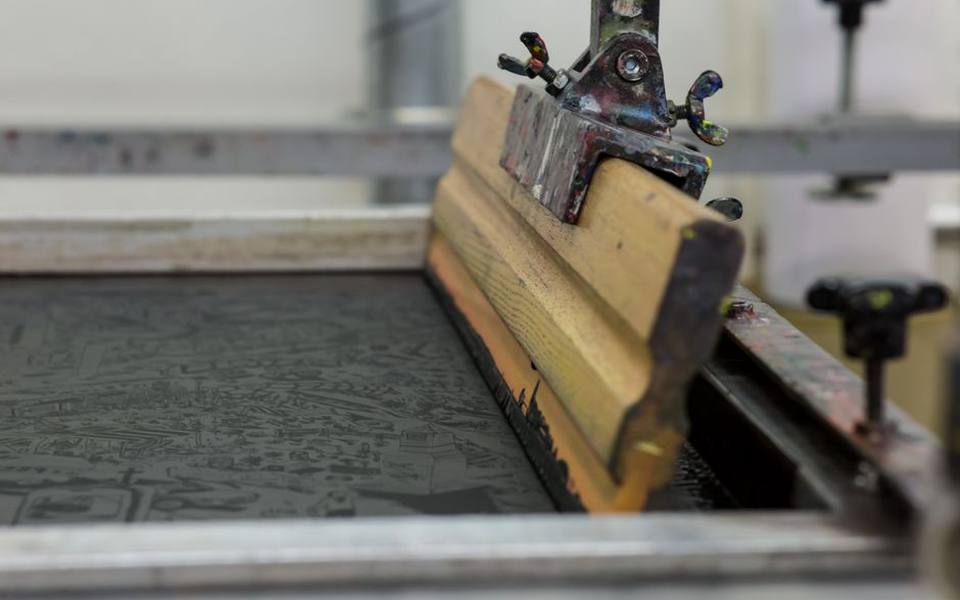
Screen printing forces ink through a woven mesh stencil onto the fabric surface below. A technician burns your design into a photosensitive emulsion coated on a metal frame, creating an open stencil where ink can pass through. A rubber squeegee then pulls specialized plastisol or water-based ink across the screen, depositing an even layer onto each garment.
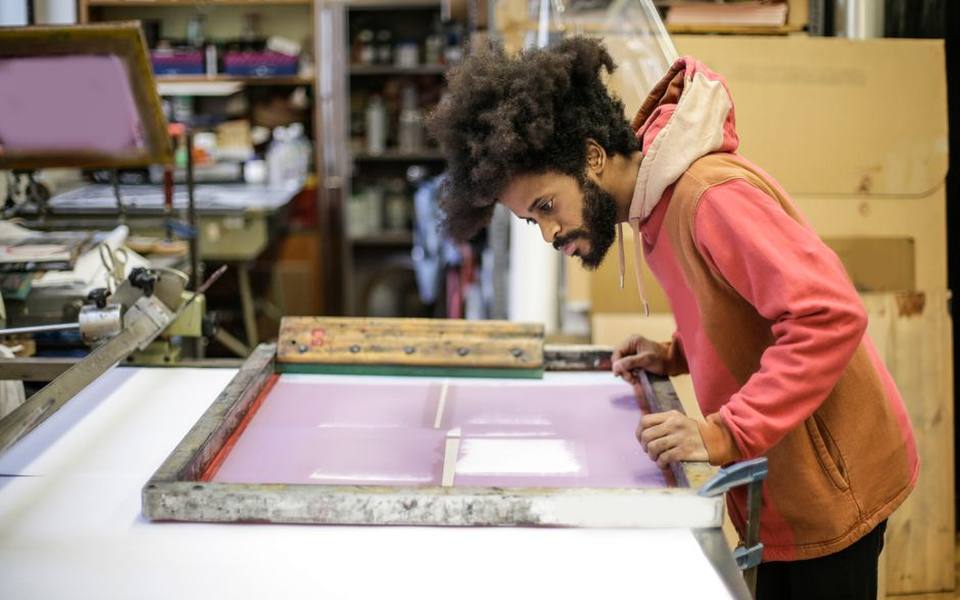
Every distinct color in your artwork requires its own individual screen, physical setup, and press alignment. If your design features four spot colors, the shop must burn and calibrate four separate screens before printing a single shirt. Once printed, the apparel passes through an industrial conveyor dryer to cure the ink at high heat, locking the pigments into the fibers.
Because the manual labor happens upfront during file preparation and screen burning, production becomes remarkably fast once the press is running. This setup cost makes the method less economical for single pieces, but exceptionally affordable once an order scales into dozens or hundreds of units.
Direct-to-Garment Printing for Low Quantities and Detail
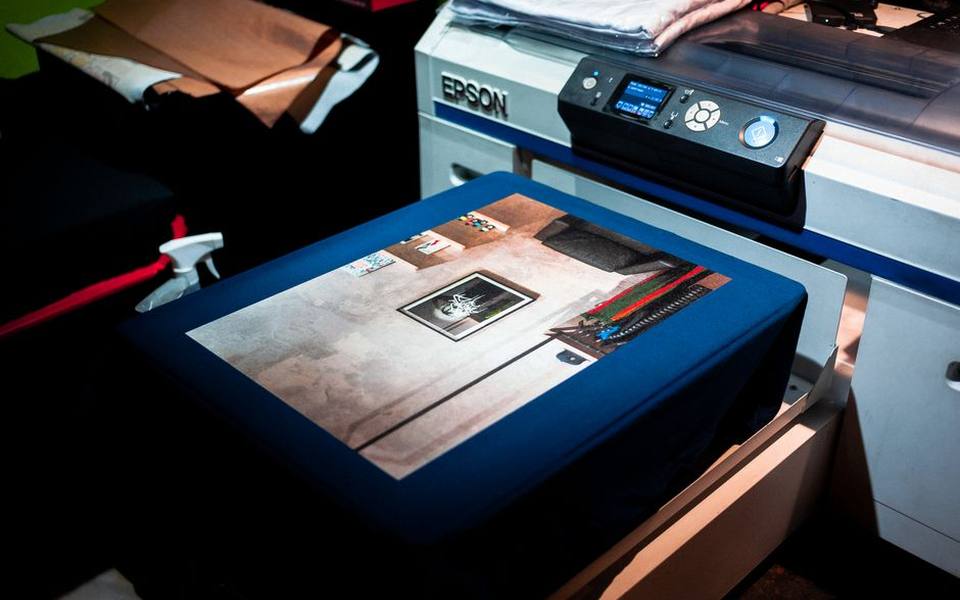
Direct-to-garment printing bypasses stencils entirely by spraying specialized water-based textile inks directly onto the shirt fabric. The garment is mounted on a flat platen that slides into a large digital printer, where print heads apply millions of micro-droplets to recreate your digital file. Dark garments receive a liquid pre-treatment spray followed by an opaque white underbase before the color layer goes down.
DTG shines when an order involves detailed full-color illustrations, subtle shading, or realistic photographic portraits. Because there are no physical screens to create, a shop can print a one-off sample or a small batch of a dozen shirts without charging substantial setup fees. It allows independent creators and small businesses to test merchandise without committing to a full warehouse run.
The trade-off comes down to unit economics and fabric choice. DTG requires garments with high natural fiber content, ideally one hundred percent ring-spun cotton, because the water-based ink cannot bind properly to slick polyester strands. The per-shirt price also stays relatively flat, meaning a hundred DTG shirts will rarely drop in price the way a large screen-printed batch does.
Direct-to-Film and Heat Transfer Alternatives
Over recent years, direct-to-film, commonly called DTF, has carved out a large segment of the custom apparel market. In this hybrid process, a digital printer outputs your graphic onto a clear PET transfer film, which is then dusted with a hot-melt adhesive powder and cured. The finished transfer is placed on the garment and bonded permanently using a commercial heat press.
DTF provides sharp, vibrant graphics that can be applied to almost any fabric blend, including pure polyester, fleece hoodies, nylon jackets, and structured canvas caps. Unlike traditional cut-vinyl transfers, modern film transfers do not feel rigid or rubbery when applied correctly, and they handle fine lines without requiring tedious weeding by hand.
Many regional printers, such as commercial facilities listed among our places to print in Texas, use DTF transfers for small-batch sports uniforms, left-chest corporate logos, and performance wear where traditional ink might bleed or migrate during heat curing.
Comparing Setup Costs, Unit Pricing, and Minimums
Understanding how print shops calculate pricing helps you structure your order to fit your budget. With screen printing, your invoice usually lists setup or screen fees alongside the per-garment charge. Screen setup fees typically range around fifteen to thirty dollars per color per print location, which means a three-color graphic on both the front and back can require six separate screens.
When you divide those setup costs across three hundred event tees, the per-shirt expense adds mere pennies. If you try to print only six shirts, however, the screen fees alone can exceed the value of the garments. For that reason, most professional screen shops establish a firm minimum order quantity, typically starting at twelve, twenty-four, or forty-eight pieces per design.
Digital printing and DTF operate on the opposite pricing curve. There are rarely setup fees per color, so printing one shirt costs virtually the same per piece as printing fifteen. However, because each shirt takes several minutes to print and cure on the machine, labor costs remain steady, making bulk orders above seventy-five units significantly more expensive than screen printing.
Garment Selection and Fabric Blends
The blank shirt you select shapes how the finished print looks and how long the garment stays in rotation. Standard tubular heavy cotton shirts offer an affordable, sturdy base that works well for work crews or large volunteer events. However, ring-spun combed cotton provides a much smoother, tighter weave that dramatically improves print sharpness on both screen presses and digital printers.
Blended fabrics, such as fifty-fifty cotton-polyester or poly-cotton-rayon tri-blends, offer exceptional softness and a lightweight drape that people love to wear casually. These fabrics introduce technical challenges for printers, as high drying heat can cause synthetic dyes to gas out and discolor the printed ink, a phenomenon known as dye migration. Experienced apparel decorators use low-cure bleed-resistant inks to prevent white graphics from turning gray or pink.
If you are ordering apparel for athletic teams, pure polyester performance fabrics require specific treatments. Traditional screen printing on activewear requires specialized stretch additives and low-bleed barrier bases, while sublimation printing or DTF transfers often provide cleaner results without risking scorched fabric.
Preparing Artwork for Clean Production
Artwork problems represent the single most common cause of production delays and unexpected art fees. Screen printing requires vector artwork built in programs that allow color separation into crisp, solid shapes. File formats like AI, EPS, or cleanly layered PDF documents allow the prepress department to isolate each color channel and generate opaque film positives for burning screens.
If you only have a raster image, such as a PNG or JPEG, it must be created at full print size with a resolution of at least three hundred dots per inch. Sending a seventy-two DPI web graphic taken from a social media page will result in pixelated, jagged edges when blown up to twelve inches across a chest. While many print centers that handle document scanning and graphic design can vectorize low-res logos, expect an hourly artwork fee for that service.
Pay close attention to typography and line weights before sending files out for production. Fonts should always be converted to outlines or paths so the printer does not encounter missing font substitution errors. Extremely fine lines under one point in thickness may wash out during screen development or fail to hold sufficient ink on open-weave textiles.
Print Placements, Sizing, and Ink Types
Planning where your graphic sits on the shirt avoids awkward proportions across different apparel sizes. Standard adult placements include full front chest, full back, left chest pocket area, and sleeve prints. A standard full-front design typically spans ten to twelve inches wide, which fills out an adult medium or large naturally without wrapping awkwardly under the armpits.
When an order includes both youth sizes and adult XXL shirts, a single graphic size will not look the same on every shirt. A twelve-inch design physically cannot fit onto a youth small garment. You must either size your art down to fit the smallest garment in the run, or pay for two separate sets of screens to scale the art proportionally across youth and adult batches.
Ink choices also alter the wearable experience. Plastisol ink provides vibrant opacity, sharp detail, and long-term durability on almost any material. Discharge and water-based inks bleach out the shirt's original dye and replace it with breathable pigments, resulting in a shirt where you cannot feel the print with your fingers after the first wash, though they perform best on untreated natural cotton.
Working with Local Print Shops Versus Online Portals
Ordering through large web aggregators offers convenient online design tools, but working directly with a regional screen printing facility brings substantial advantages. Local shops keep blank fabric samples on hand, letting you physically feel different fabric weights, collar styles, and brand cuts before committing your organization's funds. You can inspect print swatches to see the actual texture of plastisol versus water-based ink.
Communication is simpler when resolving tight turnarounds or unusual placements. A local shop supervisor can tell you immediately if a seam will interfere with your art or suggest an alternate blank that is currently in stock at nearby wholesale distribution warehouses. For business managers, sourcing apparel from regional vendors listed under our directory's places to print in California or local listings across other states keeps turnaround predictable and eliminates shipping transit damage.
Turnaround times for custom garment production typically range from seven to fourteen business days after artwork approval and blank garment delivery. If you need urgent turnaround, local printers can often source blank shirts overnight from regional apparel distributors, whereas overseas or giant online platforms operate on rigid production queues.
Quality Checks and Caring for Custom Apparel
When your order arrives, perform a quick quality audit before handing shirts out to your team or customers. Check the alignment of the graphic across several shirts to ensure prints are level and centered relative to the collar seam. Rub your hand firmly across the printed area; the ink layer should feel supple, bonded to the weave, and free from sticky patches, pinholes, or surface cracking.
Cure quality determines whether ink survives the laundry. If a conveyor dryer was set slightly too low or ran too fast, under-cured plastisol ink will peel or flake off during the first household wash. If you spot flaking or notice ink washing away along the edges, contact your printer immediately, as properly cured prints should easily outlast the fabric itself.
To maximize the lifespan of custom-printed apparel, advise wearers to wash garments inside out in cold water with mild detergent. Avoid aggressive chlorine bleaches, and tumble dry on low heat or hang dry whenever possible. Heat is the natural enemy of textile inks and transfer adhesives, and high-heat drying cycles will accelerate garment shrinkage and ink wear over time.
Published 2026-09-20 · reviewed with each rebuild, last September 2026.
Find places to print near you
The directory lists 23,804 places to print by state and city — pick your state or use the “Near me” button in the header.
More guides
-
 Service
Where to Get Passport and Visa Photos Taken: Costs and Specs
-
 Service
What Collating and Kitting Mean in Commercial Printing
-
 Service
Choosing Where to Print Your Digital Photos: Online Labs vs. Neighborhood Stores
-
 Buying
Standard Business Card Sizes, Stock Thickness, and Printing Costs
-
 Buying
Choosing the Right Custom T-Shirt Printing Method and Understanding Costs
-
 Service
A Practical Guide to Printing Digital Files, Fixing Common Output Errors, and Preparing Custom Media
-
 Buying
Understanding Sticker Cutting Styles: Die Cut, Kiss Cut, and Custom Formats
-
 Buying
How to Order Custom Canvas Prints: Materials, Sizes, and Costs
-
 Buying
Business Card Printing: Design, Templates, Finishes, and Local Vendors
-
 Service
A Guide to Photo Printing, Passport Photos, and Custom Photo Books
-
 Buying
Digital and Physical Gift Cards: Buying, Printing, and Custom Solutions
-
 Buying
Custom Event Invitations: Graduation, Wedding, and Party Announcements
-
 Buying
Custom Canvas Prints: Framing Options, Wall Art Sizes, and Collage Design
-
 Service
Online Fax Services: Sending and Receiving Digital Faxes Without a Landline
-
 Buying
Custom Embroidered Patches, Clothing Badges, and Hat Embroidery
-
 Service
International Shipping Services: Comparing DHL, USPS, UPS, and FedEx
-
 Service
A Complete Guide to Custom Stickers, Vinyl Decals, and Die-Cut Labels
-
 Buying
Custom Drinkware and Water Bottle Printing Guide
-
 Buying
Custom Rubber Stamps and Self-Inking Stamp Guide
-
 Buying
Guide to Personalized Wrapping Paper and Custom Gift Packaging
-
 Buying
Custom Banners, Table Covers, and Trade Show Displays: Materials, Hardware, and Setup
-
 Service
Custom Apparel, Embroidery, and Patch Production Guide
-
 Buying
Custom Playing Cards and Deck Printing Buying Guide
-
 Service
Custom Greeting and Holiday Card Printing Guide
-
 Owning
Custom Vehicle Magnets and Bumper Stickers: Thickness, Durability, and Finish Guide